一袋賣了快 40 年的粉紅色嫩薑,原料全在台灣:中國食品業拿日本的岩下新生姜當藥食同源教材
A pink pickled ginger Japan has bought for nearly 40 years is grown entirely in Taiwan, and China's food industry now studies it as a food-as-medicine case
文:Jasmine Chang・Souls of Sunshine
日本超市冷藏櫃裡的「岩下の新生姜」,1987 年上市,原料是台灣在來種本島薑,只種在南投、埔里和嘉義梅山,大約 30 戶農家。2019 年它成了第一個做到機能性表示食品的醋漬薑,說的是「維持指尖溫度」。11/24,中國的 Foodaily 把它寫進「藥食同源・薑」系列第 8 篇,說它累計賣了 3 億包,標題卻寫「一塊中國姜」。
30 秒版TL;DR
- 出身:1978 年岩下食品社長在飛往台灣的飛機上吃到醃嫩薑,花 9 年搭低鹽低溫的冷鏈,1987 年在日本上市;總部在栃木市,2015 年開了博物館,一年 14、15 萬人去。
- 產地:只用台灣的本島薑,南投、埔里、嘉義梅山約 30 戶契作農家,挖溝、培土三四次、全部手工,6 到 7 月採收、當天下漬;包裝原料欄寫「しょうが(台湾)」。
- 現在:2019 年以「薑來源多酚、維持指尖溫度」申報機能性表示食品(D662);這個月還在出聯名。Foodaily 稱它累計賣了 3 億包,當成中國藥食同源產品的參考案例。
導讀WHY IT MATTERS
這是一個台灣人每天經過、卻很少注意的故事:台灣中部的嫩薑,撐起日本一個賣了快 40 年的品牌,現在又被中國食品業拿去研究藥食同源。同一塊薑,三個地方講出三種故事,剛好看清楚產地、品牌和健康說法之間,價值是怎麼分配的。
- 本島薑
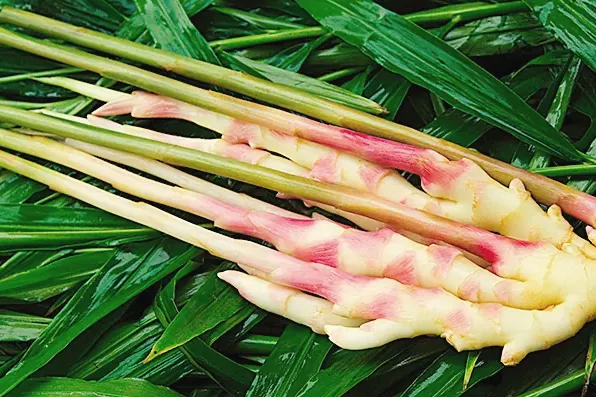
- 台灣的在來種薑,岩下說它只在台灣種得出來(Nippon.com 說又叫竹薑)。種法是先挖 50 到 60 公分的深溝,芽冒出來就培土,重複三到四次,讓根莖在軟土裡往上長,所以長得細長、纖維少、水分多、辣味溫和;6 到 7 月趁嫩採收。泡一晚醋,尖端會自然轉紅,這是嫩薑本身的色素遇酸顯色。這個故事裡,它是整個品牌唯一的原料。
- 機能性表示食品
- 日本的一種食品標示制度:企業自己負責,把科學根據(文獻的系統性回顧或臨床試驗)和安全性資料向消費者廳申報,受理後就能在包裝上寫特定的健康功能,例如「維持指尖溫度」。和「特定保健用食品」(特保)不同,消費者廳不會逐件審查,2025 年 4 月起系統性回顧要依 PRISMA 2020 的寫法。包裝上一定會寫:不是用來診斷、治療或預防疾病。岩下申報的成分是薑來源多酚,編號 D662。
- 藥食同源
- 中醫養的老觀念:很多食物同時也是藥,差別在用量、用法和吃的人。在中國,這也是一套管理制度:國家衛生健康委員會有一份「既是食品又是中藥學材」的物質名單,名單上的東西可以做成一般食品,薑(生薑、乾薑)就在上面。現在中國食品業把它當成大趨勢在開發新品,Foodaily 的「藥食同源・薑」系列就是在拆解這類案例。
- 生薑的性味
- 臺灣中藥典寫生薑「辛,溫」,歸肺、脾、胃經,效能是發汗解表、溫中止嘔、溫肺止咳化飲(中國藥典寫「辛,微溫」)。白話說:受了風寒、剛開始怕冷的小感冒,可以幫忙發點汗;胃寒想吐時能溫胃止嘔,所以有「嘔家聖藥」的說法。古書說「生用發散,乾則溫中」:新鮮的偏散表寒,曬乾的乾薑偏溫裡。藥用的是新鮮根莖,有一定用量(中國藥典寫 3 到 10 公克);醋漬嫩薑是小菜,不能直接畫上等號。
這則在講什麼THE STORY
1978 年,岩下食品當時的社長岩下邦夫搭飛機去台灣出差,在機上餐點吃到一種很水、很脆、香氣很新鮮的醃嫩薑。他回頭去找產地,才知道那是台灣的在來種「本島薑」(日文寫ペンタオジャン;Nippon.com 的中文版說它又叫竹薑)。他試過把它搬到日本種,長不出一樣的東西,最後決定留在台灣「適地適作」。接下來的問題是保鮮:照傳統漬物那樣高鹽醃,清爽的味道就沒了;鹽放少,又放不久。岩下的解法是低鹽、低溫醃漬,冷藏貨櫃海運,再冷藏保存,這條冷鏈前後花了 9 年。1987 年,「岩下の新生姜」上市,名字的「新」是雙關:既是嫩薑,也是「以前沒有過的新型薑漬」。岩下食品總部在栃木縣栃木市,創業於 1899 年。2015 年,它在總部附近開了岩下新生姜博物館,Nippon.com 說每年有 14、15 萬人去。每年 11 月 11 日,是它自己訂的「岩下新生姜之日」,因為細長的薑排在一起,看起來像一排 1。
岩下的官網寫得很清楚:產地只限南投縣的南投、埔里,和嘉義縣的梅山,大約 30 戶農家在種,很多從 1987 年就合作到現在,有的已經是祖孫三代。日本派社員駐在產地,和農家、當地工廠一起管。本島薑的種法很費工:先挖 50 到 60 公分深的溝,把種薑種下去;芽一冒出來就培土,讓它在軟土裡往上長,重複三到四次,溝被填成隆起的畦,就到了收成的時候,從種到收全部手工。Nippon.com 說每年 6 到 7 月採收。收成當天送進當地工廠下漬,泡一晚醋,薑的尖端會自然變成鮮紅色。岩下一年只收一次原料,靠冷藏撐一整年。那個粉紅色,一部分是嫩薑自己的天然色素遇酸顯色;但 80 公克那包的原料欄除了「しょうが(台湾)」,也列了「野菜色素」。台灣,在包裝上只出現在這個括號裡。
2019 年 5 月 17 日,岩下的新生姜以機能性表示食品向日本消費者廳申報並被受理,編號 D662,是栃木縣第一個、也是第一個醋漬薑做到的。它申報的機能性成分是「薑來源多酚」,表示的內容是:在寒冷季節或冷氣環境下,有助維持末梢(手指尖)的體溫。這是企業自己負責、附上科學根據去申報,消費者廳並沒有逐件審查。Foodaily 整理它的聯名:2017 年和宮島醬油做粉紅色咖哩(每包 27 公克新生姜,占 15%)、2022 年和日水做天婦羅、和富士麵包做三明治,2023 年和全家做的稻荷壽司賣了 145 萬份,還有 Sangaria 的汽水、寶酒造的燒酎。岩下官網的新聞列表上,光是這個月就有全家的「冷塔塔南蠻雞」(11/3)、和八幡屋礒五郎的七味粉(11/6),以及寶酒造的「焼酎ハイボール 岩下の新生姜割り」(11/10 起數量限定)。
11 月 24 日,中國食品產業媒體 Foodaily 每日食品,在 36 氪刊出「藥食同源・薑」系列第 8 篇,主角就是岩下新生姜。文章說它累計賣出超過 3 億包,巔峰時單一品項一年賣超過 30 億日圓,還一度帶著整間公司的營業額衝破 100 億日圓;這些數字是 Foodaily 的說法,岩下的官網沒有公布。這篇的標題寫的是「一塊中國姜,被日本人做成粉色 IP」,內文則寫原料是「來自中國台灣」的本島姜。岩下自己的官網和包裝,寫的都是台灣。中國的食品業正在大推「藥食同源」:國家衛生健康委員會有一份既是食品又是中藥材的物質名單,薑(生薑、乾薑)就在上面。Foodaily 把岩下當成一個範例,看一塊小菜怎麼跳出餐桌、怎麼把「暖身」講成商品。
我的看法:岩下新生姜真正的護城河不是粉紅色,是台灣中部那 30 戶農家和 1987 年就搭好的冷鏈;但名字、故事和溢價,幾乎都留在栃木。看它的分工就很清楚:挖溝、培土三四次、手工採收、當天下漬,在台灣;命名、聯名、博物館、機能性表示,在日本。包裝上,台灣只出現在原料欄的一個括號裡。這次更有意思的是,Foodaily 的標題寫「一塊中國姜」,岩下自己寫的是台灣。誰來講產地的故事,產地的價值就算在誰身上,連產地的名字都可以被別人改寫。第二個大家沒講的點:岩下把「薑是溫的」這句東方老常識,翻成日本法規聽得懂的語言:薑來源的多酚、維持指尖溫度,再拿到一個申報編號。中醫講性味,它講成分和指尖,同一件事,賣給不同的人。所以台灣可以學的,不是做粉紅色,是把「本島薑」、把南投、埔里、梅山的夏天嫩薑,變成一個說得出名字、有自己故事的產地。接下來我會看:中國食品業做藥食同源,會不會乾脆自己種、自己做一個「新生姜」。
數字BY THE NUMBERS
Jasmine 說MY TAKE
Jasmine 說
我的看法:
薑種在台灣,故事留在栃木。
包裝上,台灣只在原料欄的括號裡。
岩下把「薑是溫的」,
翻成成分和指尖溫度。
台灣有產地,
缺的是把產地講成名字的那一步。
你可以怎麼用HOW TO USE THIS
- 在日本找它:超市冷藏的漬物櫃,粉紅色細長袋子,背面原料欄寫「しょうが(台湾)」。80 公克一包 11 大卡,鹽是 2.2 公克,要冷藏 0 到 10 度保存。
- 薑在中醫是溫性的:體質學偏熱、容易口乾舌燥,或有胃灼熱、胃酸逆流的人(中醫說的熱盛、陰虛內熱),不要大量吃;在吃抗凝血藥(例如 warfarin)、懷孕想用薑止吐,或在控制血壓、要少鹽的人,先問醫師或中醫師。
來龍去脈TIMELINE
- 岩下邦夫在飛往台灣的飛機上吃到醃嫩薑。
- 花 9 年建好冷鏈,「岩下の新生姜」上市。
- 岩下新生姜博物館在栃木市開幕。
- 機能性表示食品申報受理,編號 D662。
- 和寶酒造的限量燒酎 highball 全國上市。
- Foodaily 的「藥食同源・薑」系列第 8 篇寫它。
接下來看什麼:中國食品業的藥食同源新品,會不會出現用自己產的薑做的「新生姜」。;明年 6、7 月台灣嫩薑採收季,本島薑能不能在台灣也被講成一個有名字的產地。
這篇提到的,SOS 練得到PRACTISE IT AT SOS
在 SOS 接著練SOULS OF SUNSHINE
相關脈案RELATED
IN ENGLISH
A pink pickled ginger Japan has bought for nearly 40 years is grown entirely in Taiwan, and China's food industry now studies it as a food-as-medicine case
Iwashita no Shinshoga, the pink ginger in Japan's supermarket fridges, launched in 1987 and is made from bentao ginger, a Taiwanese native variety grown only in Nantou, Puli and Meishan by about 30 farming families. In 2019 it became the first pickled ginger with a Food with Function Claims filing, for helping keep fingertips warm. On Nov 24, China's Foodaily made it part 8 of its food-as-medicine ginger series, saying it has sold 300 million packs, under a headline that calls it Chinese ginger.
- Origin: in 1978 Iwashita's president tasted pickled young ginger on a flight to Taiwan; a low-salt, low-temperature cold chain took nine years, and it launched in Japan in 1987. The company is in Tochigi City, and its museum, opened in 2015, draws 140,000 to 150,000 visitors a year.
- Source: only Taiwan's bentao ginger, from about 30 contract farms in Nantou, Puli and Meishan, trenched, earthed up three or four times and hand-harvested in June and July, brined the same day. The pack says “ginger (Taiwan).”
- Now: a 2019 Food with Function Claims filing (D662) for ginger polyphenols that help maintain fingertip temperature, and new collabs this month. Foodaily says it has sold 300 million packs and holds it up as a model for China's food-as-medicine products.
In 1978, Kunio Iwashita, then president of Iwashita Foods, flew to Taiwan on business and was served a pickled young ginger on the plane that was juicy, crisp and fresh in a way he had never tasted in Japan. He tracked down where it came from: a Taiwanese native variety called bentao ginger (pentaojan in Japanese; Nippon.com's Chinese edition says it is also called bamboo ginger). He tried growing it in Japan and couldn't get the same result, so the company decided to keep it in Taiwan. The next problem was freshness: pickle it in heavy salt like traditional tsukemono and the clean flavor is gone; use less salt and it won't keep. Iwashita's answer was low-salt, low-temperature pickling, refrigerated containers by sea and cold storage, a cold chain that took nine years to build. Iwashita no Shinshoga launched in 1987; the shin in the name means both young ginger and a new kind of ginger pickle. Iwashita Foods is based in Tochigi City, Tochigi, and was founded in 1899. In 2015 it opened the Iwashita New Ginger Museum near its head office, which Nippon.com says draws 140,000 to 150,000 visitors a year. November 11 is the company's own Shinshoga Day, because slim ginger sticks lined up look like a row of 1s.
Iwashita's site is specific: it sources only from Nantou and Puli in Nantou County and Meishan in Chiayi County, from about 30 farming families, many of them partners since 1987 and some into a third generation. Japanese staff are stationed there, working with the farmers and a local factory. The method is labor-heavy: dig trenches 50 to 60 cm deep, plant the seed ginger, and every time shoots appear, cover them with soil so the rhizome grows upward in soft earth. After three or four rounds the trench has become a raised ridge and it is time to harvest, all by hand. Nippon.com says harvest is in June and July. The ginger goes into brine at the local factory the same day; after a night in vinegar its tips turn a vivid red on their own. Iwashita harvests once a year and keeps the crop cold for the whole year. The pink is partly young ginger's own pigment showing in acid, but the 80 g pack's ingredient list also includes vegetable color alongside “ginger (Taiwan).” That bracket is where Taiwan appears on the pack.
On May 17, 2019, Japan's Consumer Affairs Agency accepted Iwashita's notification of the product as a Food with Function Claims, number D662, the first in Tochigi and the first for a vinegar-pickled ginger. The functional ingredient is ginger-derived polyphenols, and the claim is that they help maintain peripheral (fingertip) temperature in cold weather or air conditioning. Under this system the company files the evidence on its own responsibility; the agency does not review each product. Foodaily lists the collabs: a pink curry with Miyajima Shoyu in 2017 (27 g of ginger per pack, 15% of it), tempura with Nissui and a sandwich with Fuji Pan in 2022, inari sushi with FamilyMart in 2023 that sold 1.45 million, a Sangaria soda and a Takara shochu. Iwashita's own news page lists three this month alone: a FamilyMart chicken nanban (Nov 3), a shichimi spice with Yawataya Isogoro (Nov 6) and a limited Takara shochu highball mixed with the ginger (from Nov 10).
On November 24, the Chinese food-industry outlet Foodaily published part 8 of its food-as-medicine ginger series on 36Kr, about Iwashita. It says the product has sold more than 300 million packs, that at its peak the single item sold over ¥3 billion a year and once pushed company sales past ¥10 billion. Those are Foodaily's figures; Iwashita does not publish them. The headline calls it “a piece of Chinese ginger turned into a pink IP by the Japanese,” and the text says the bentao ginger comes from “China's Taiwan.” Iwashita's own site and pack say Taiwan. China's food industry is pushing yao shi tong yuan, food-medicine homology: the National Health Commission keeps a list of substances that are both food and Chinese medicinal materials, and ginger (fresh and dried) is on it. Foodaily holds Iwashita up as a model of how a side dish leaves the table and turns warmth into a product.
My take: Iwashita's real moat isn't the pink, it's about 30 farms in central Taiwan and a cold chain built in 1987, yet the name, the story and the margin stay almost entirely in Tochigi. Look at the split: trenching, earthing up three or four times, hand harvest and same-day brining happen in Taiwan; the name, the collabs, the museum and the health claim happen in Japan. On the pack, Taiwan is a word in brackets in the ingredient list. What's new this time is that Foodaily's headline says “Chinese ginger” while Iwashita itself says Taiwan. Whoever tells the origin story gets credited with the origin's value, and the origin's name can be rewritten by someone else. The second point most coverage misses: Iwashita translated the old Eastern idea that ginger is warming into language Japanese regulation accepts, ginger polyphenols and fingertip temperature, and got a filing number for it. Chinese medicine養 talks about nature and flavor; Iwashita talks about compounds and fingertips. Same idea, sold to different people. So what Taiwan can learn isn't how to make something pink. It's how to turn bentao ginger, the summer young ginger of Nantou, Puli and Meishan, into a named origin with its own story. What I'll watch next: whether China's food-as-medicine wave simply grows its own and launches its own shinshoga.
- Finding it in Japan: the refrigerated pickle aisle, a slim pink pouch with “しょうが(台湾)” (ginger, Taiwan) in the ingredient list. An 80 g pack has 11 kcal and 2.2 g of salt; keep it refrigerated at 0–10°C.
- Ginger is warming in Chinese medicine: if you run hot, with a dry mouth, heartburn or reflux, don't eat it in large amounts. If you take blood thinners such as warfarin, are pregnant and want to use ginger for nausea, or are watching salt for blood pressure, ask your doctor or TCM practitioner first.
出處SOURCES
- 岩下食品:岩下の新生姜について(産地・栽培・加工)
- 岩下食品:「岩下の新生姜」誕生物語
- 岩下食品:岩下の新生姜® 80g 商品情報(原材料・栄養成分)
- 岩下食品:ロングセラー「岩下の新生姜」が栃木県内初の機能性表示食品として受理(2019/5/22)
- 岩下食品:「岩下の新生姜」機能性表示食品パッケージを全国で販売開始(2019/10/10)
- Foodaily每日食品(36氪):一块中国姜,被日本人做成粉色IP,竟卖了3亿包?(2026/11/24)
- Nippon.com:日本餐桌上的臺灣――從「岩下新生薑」的誕生來看臺灣食材的魅力(2021/1/8)
- 岩下食品:「岩下の新生姜」3商品をリニューアル(2021/3/3;關聯新聞含 2026 年 11 月的聯名)
- 岩下食品:11月11日「岩下の新生姜の日」記念コラボ(2019/10/28)
- 衛生福利部國家中醫藥研究所 qaTCM:生薑(性味歸經、效能,依臺灣中藥典)
- 中國中醫藥報(中國中醫藥網):諸姜之藥用辨析(2025/12/12)
- The Hong Kong Polytechnic University, Chinese Herbal Medicine Database: Fresh Ginger
- 消費者庁:機能性表示食品の届出情報検索
- 岩下食品(@Press):「岩下の新生姜」機能性表示食品パッケージ(2019/10/10;會社概要:1899 年創業)
- 廣東中醫藥博物館:這幾味藥「本是同根生」,用法卻大有不同(2024/1/24)
- 四平市市場監管局:藥食同源目錄大全(2020/1/3)
想一張一張滑、投票、收藏?打開互動版。