中醫田野筆記 20 張 IG 圖卡・@soulsofsunshine.life × @jslalaland・2026 年 11 月 24 日
五行,是一張關係地圖|中醫田野筆記
The five phases are a map of relationships | TCM Field Notes
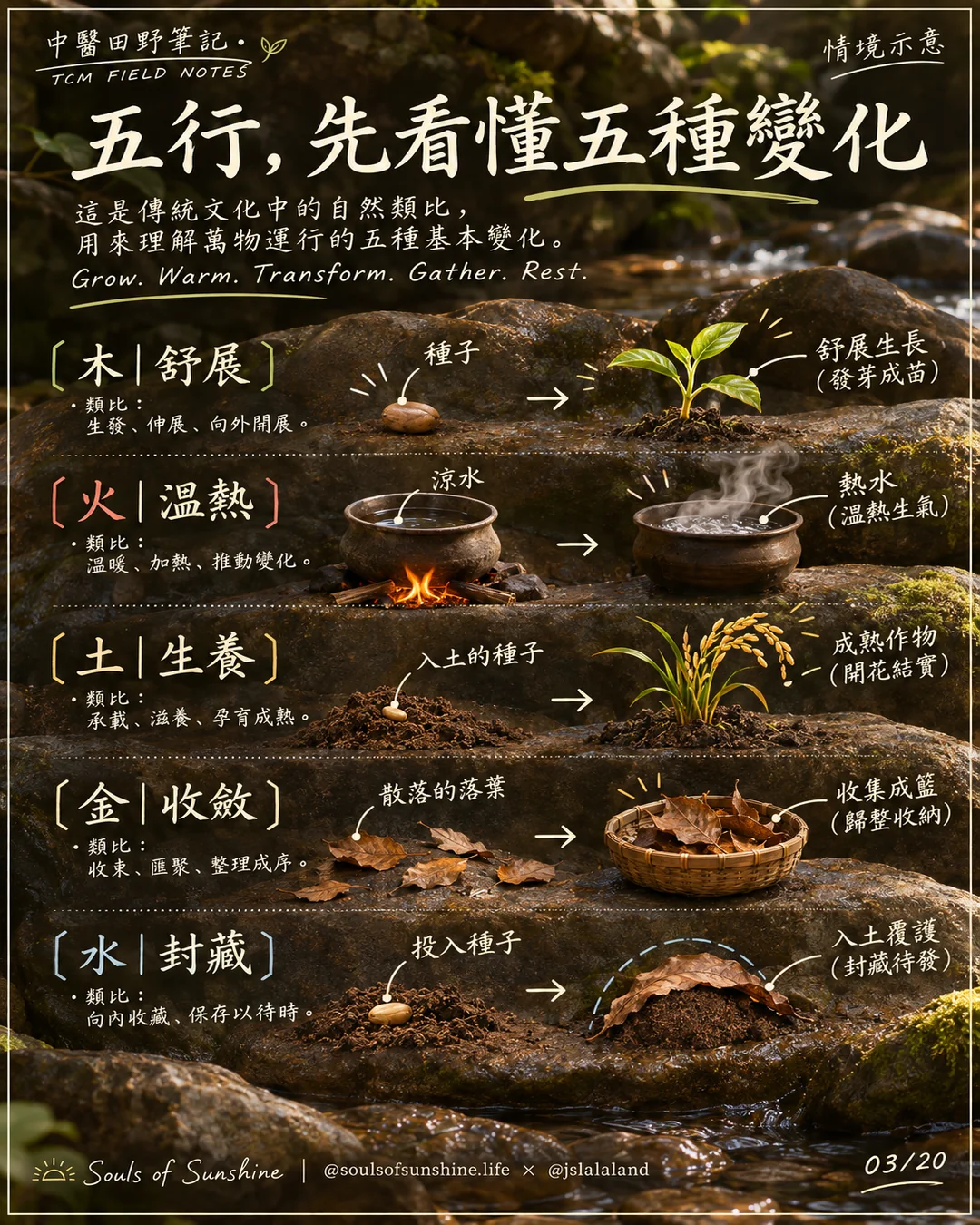
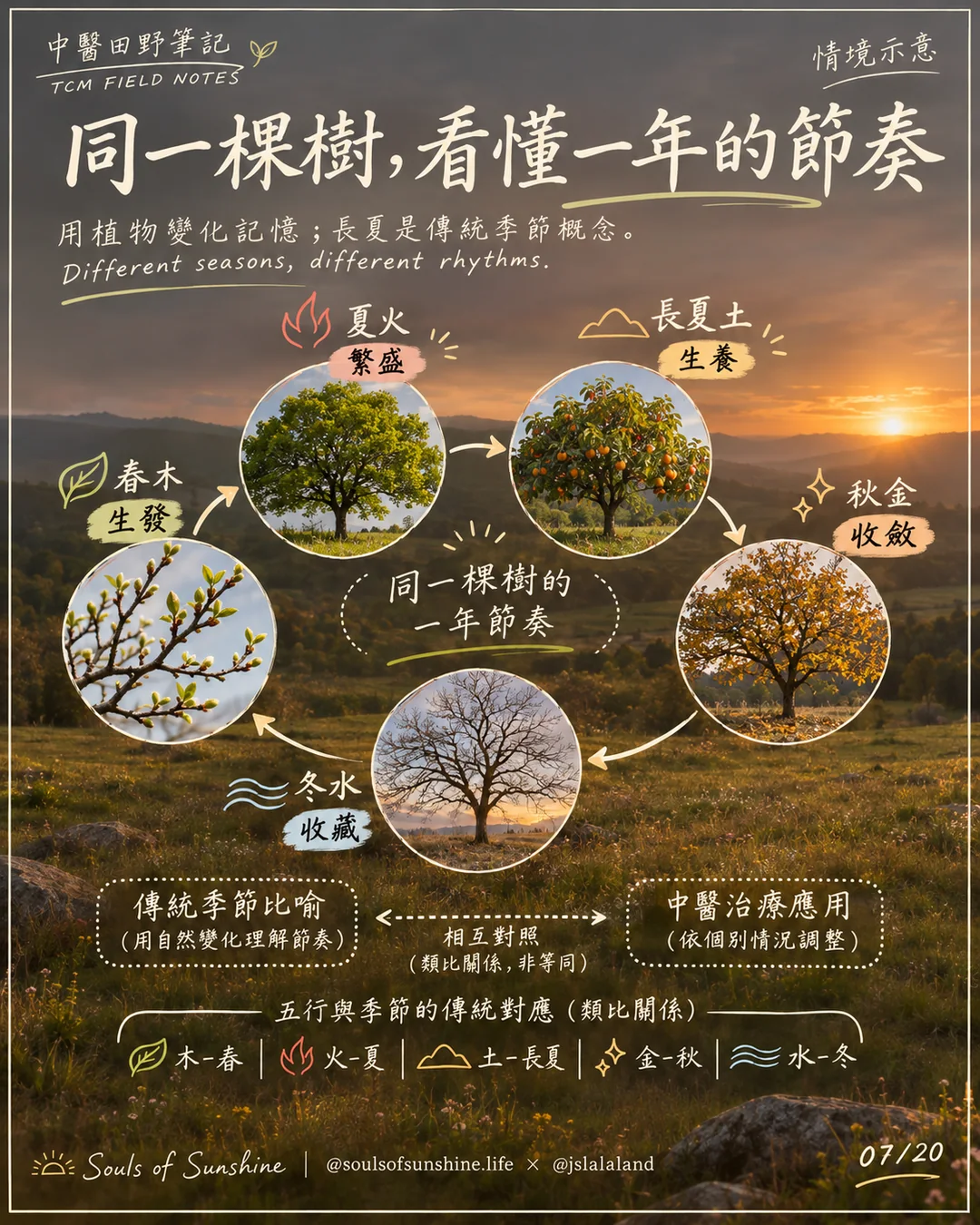
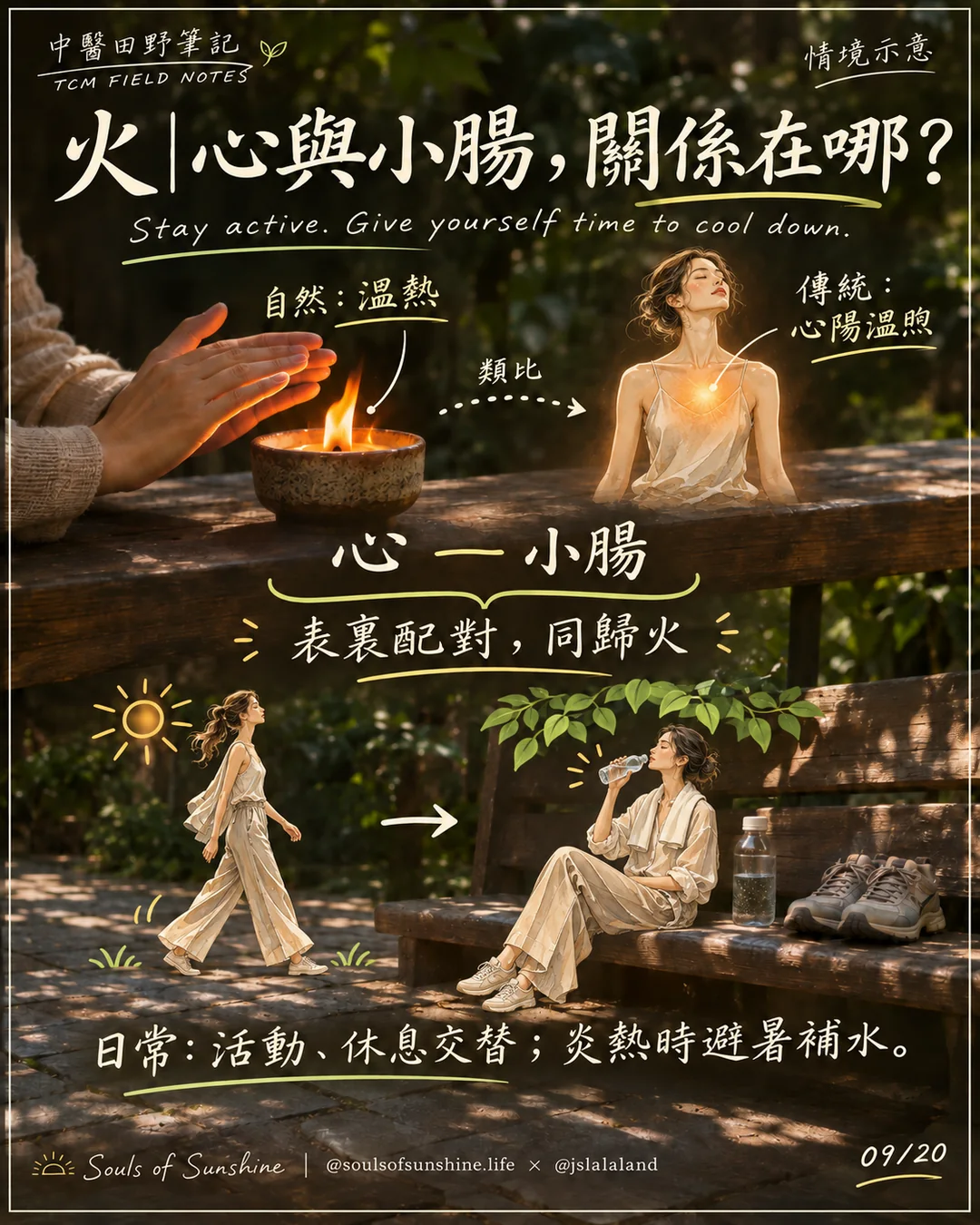
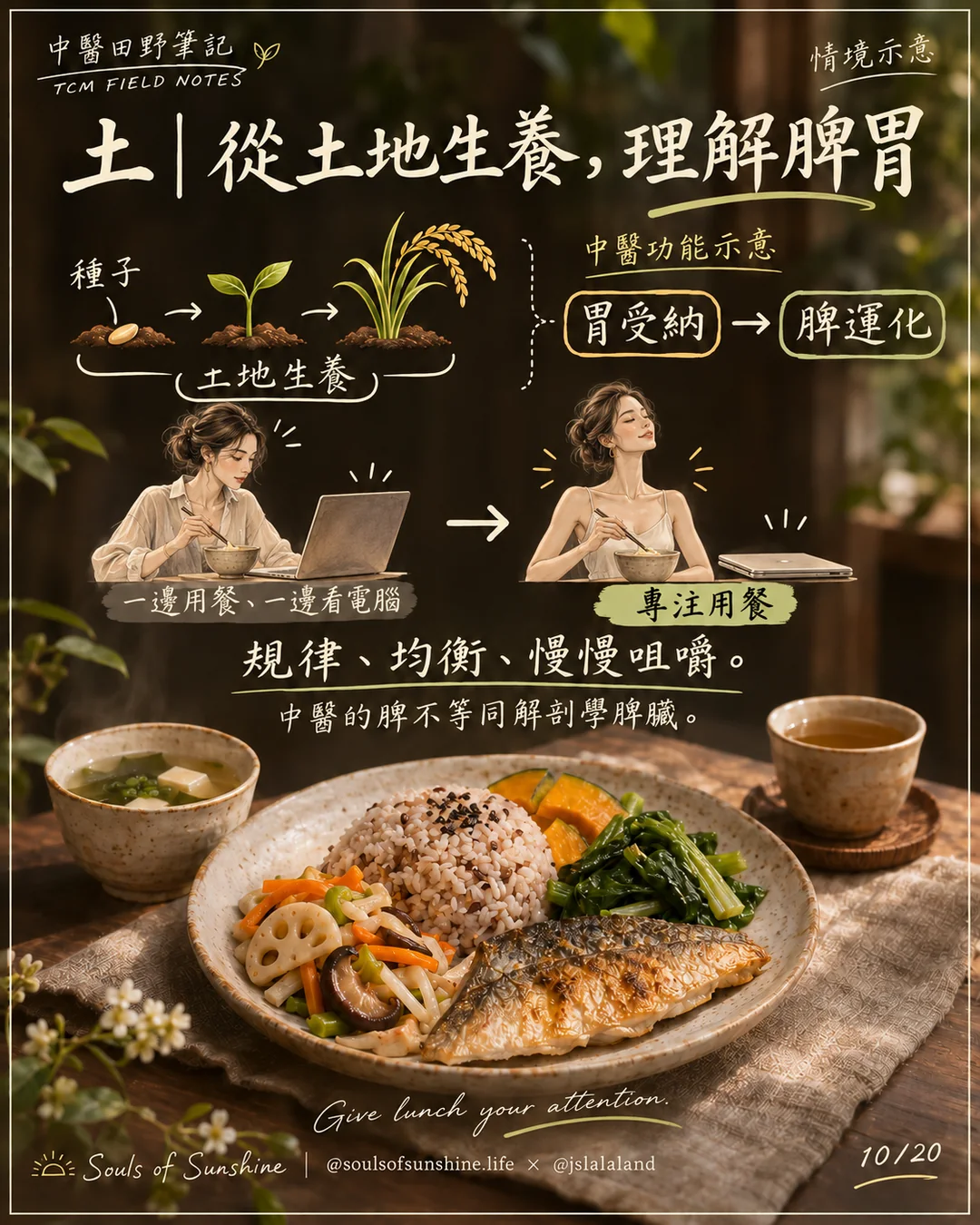
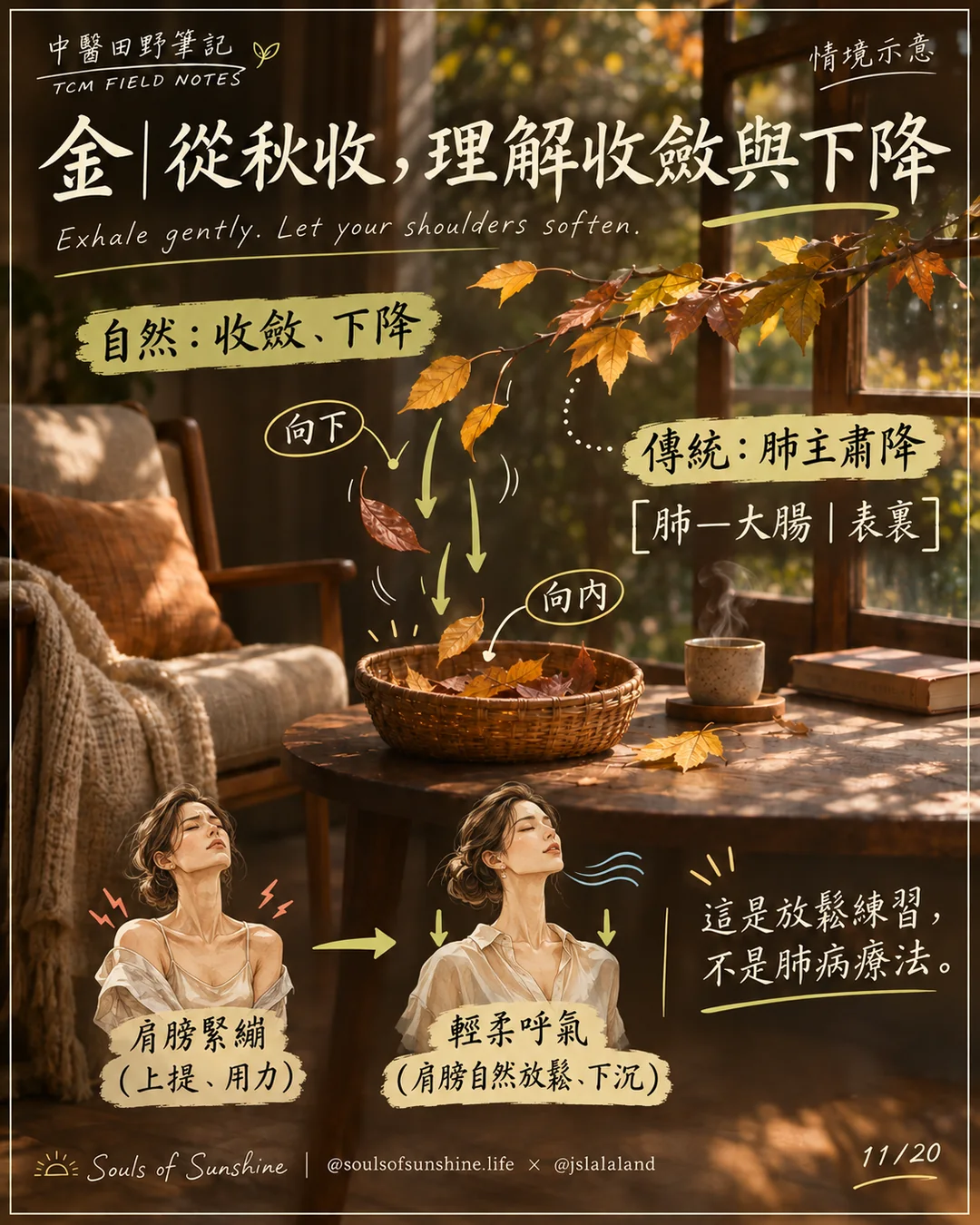
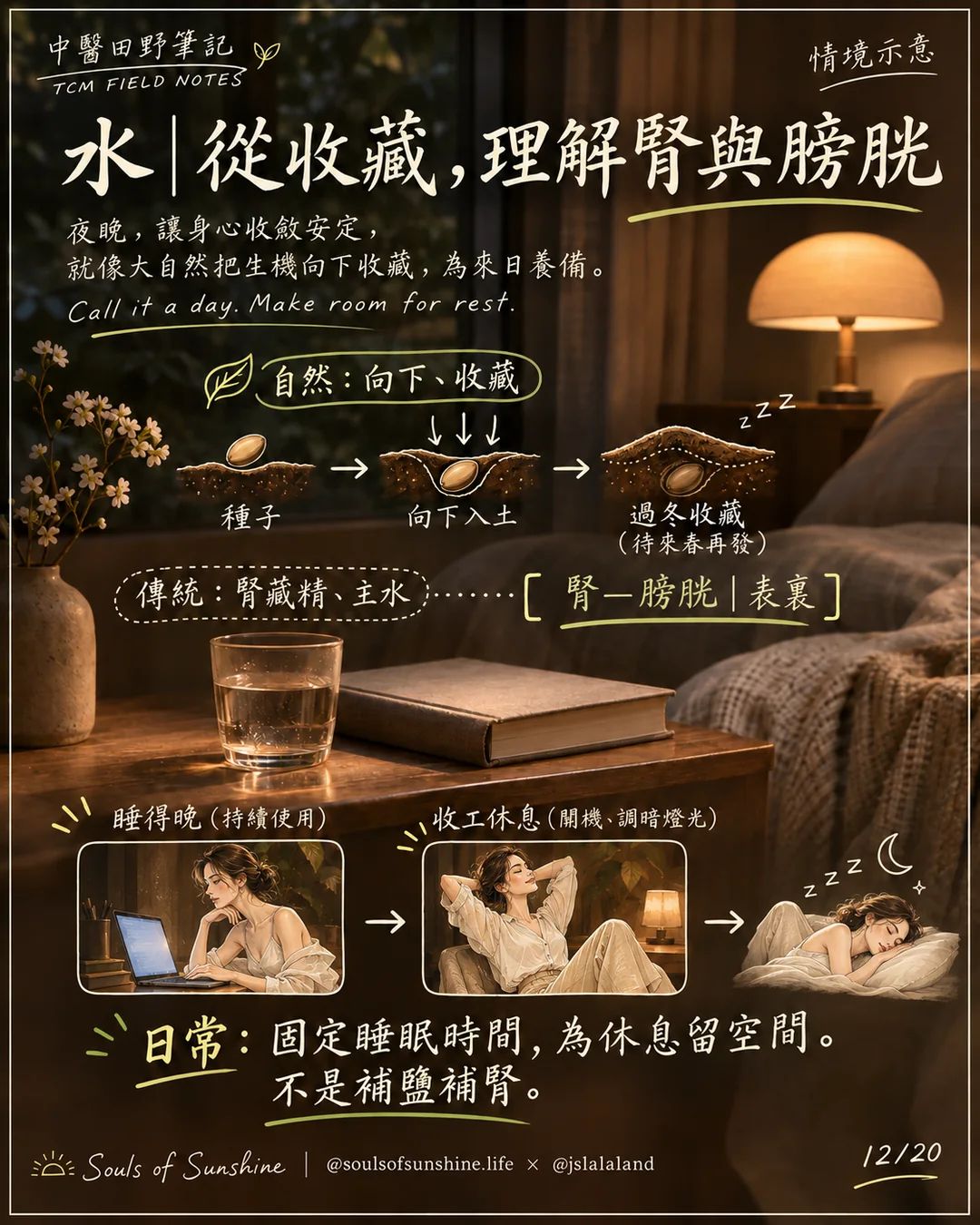
木、火、土、金、水,不是五種元素,是五種變化:舒展、溫熱、生養、收斂、封藏。這 20 張圖卡用澆水的苗、一棵樹的四季、一張行事曆,講五行的相生相剋、臟腑怎麼成對、五味和情緒的傳統對應,以及最重要的界線:這是傳統的類比和整體思考框架,不是醫療處方,也不能拿來自己診斷。
到 Chinamaxxing 自己點點看:五行相生相剋會動的圖 → Try the moving five-phase wheel on Chinamaxxing →
Jasmine 寫的FROM THE CAPTION
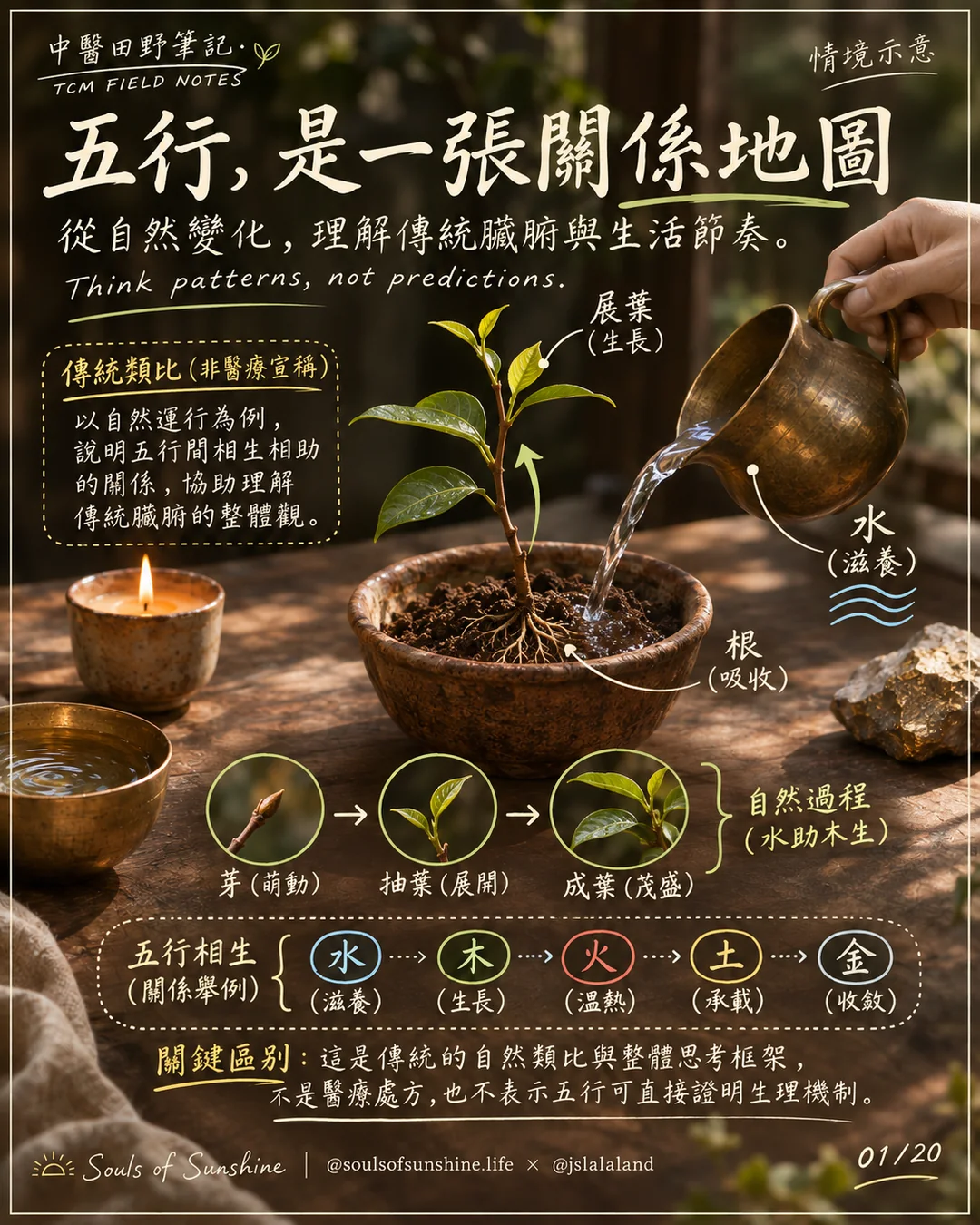
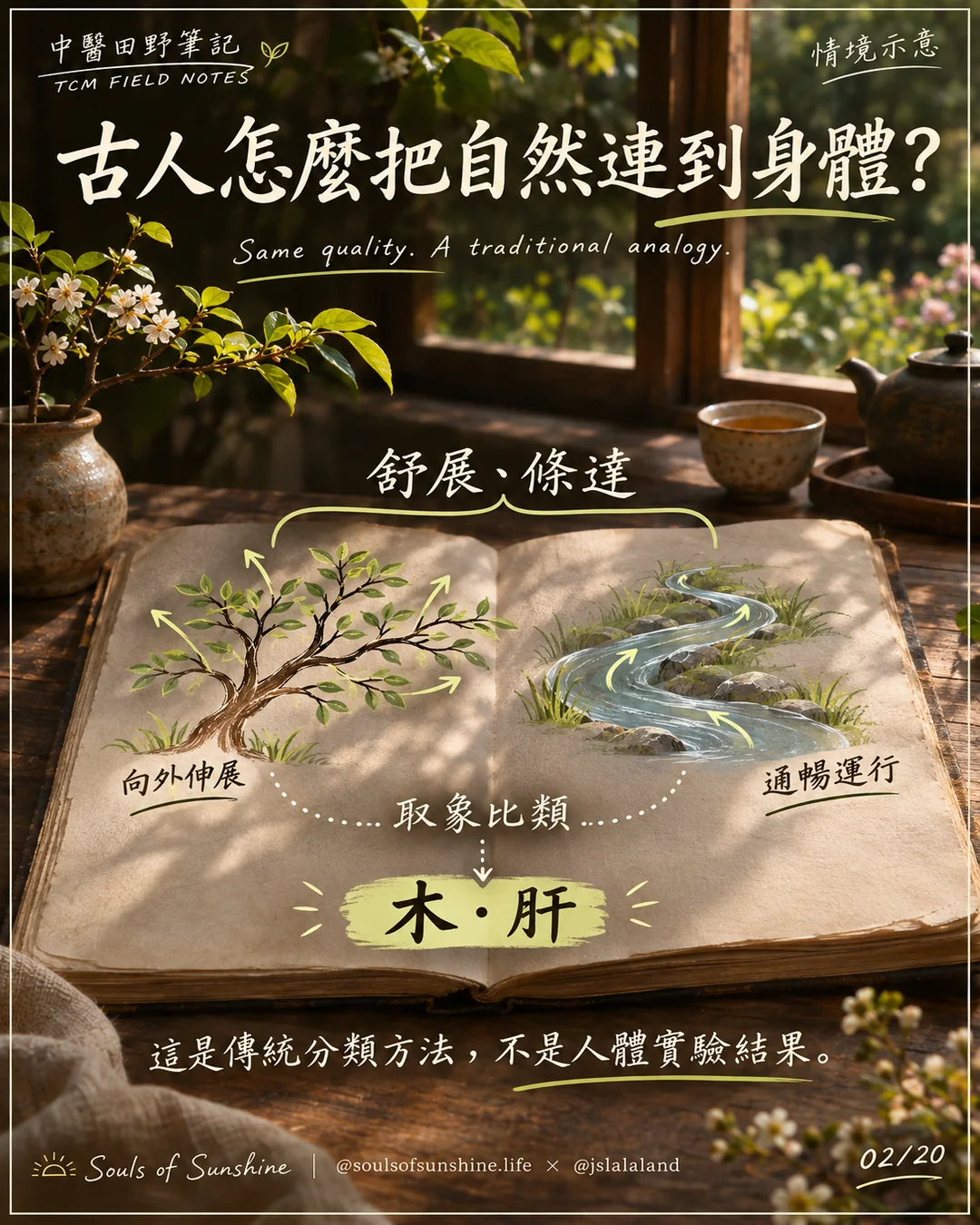
五行聚常被講成「五種元素」,但我比較喜歡把它當成一張關係地圖:木、火、土、金、水,是五種變化,舒展、溫熱、生養、收斂、封藏。
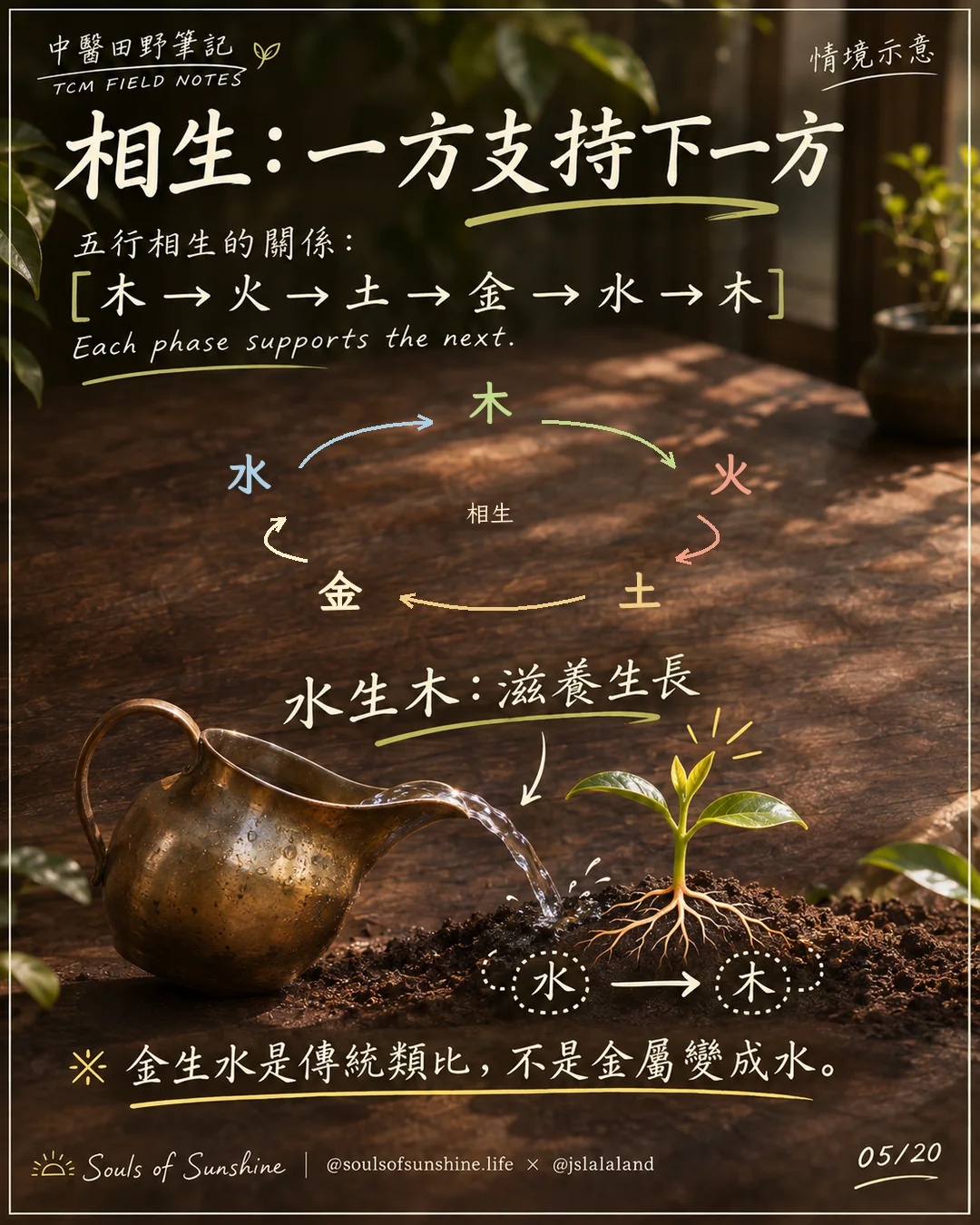
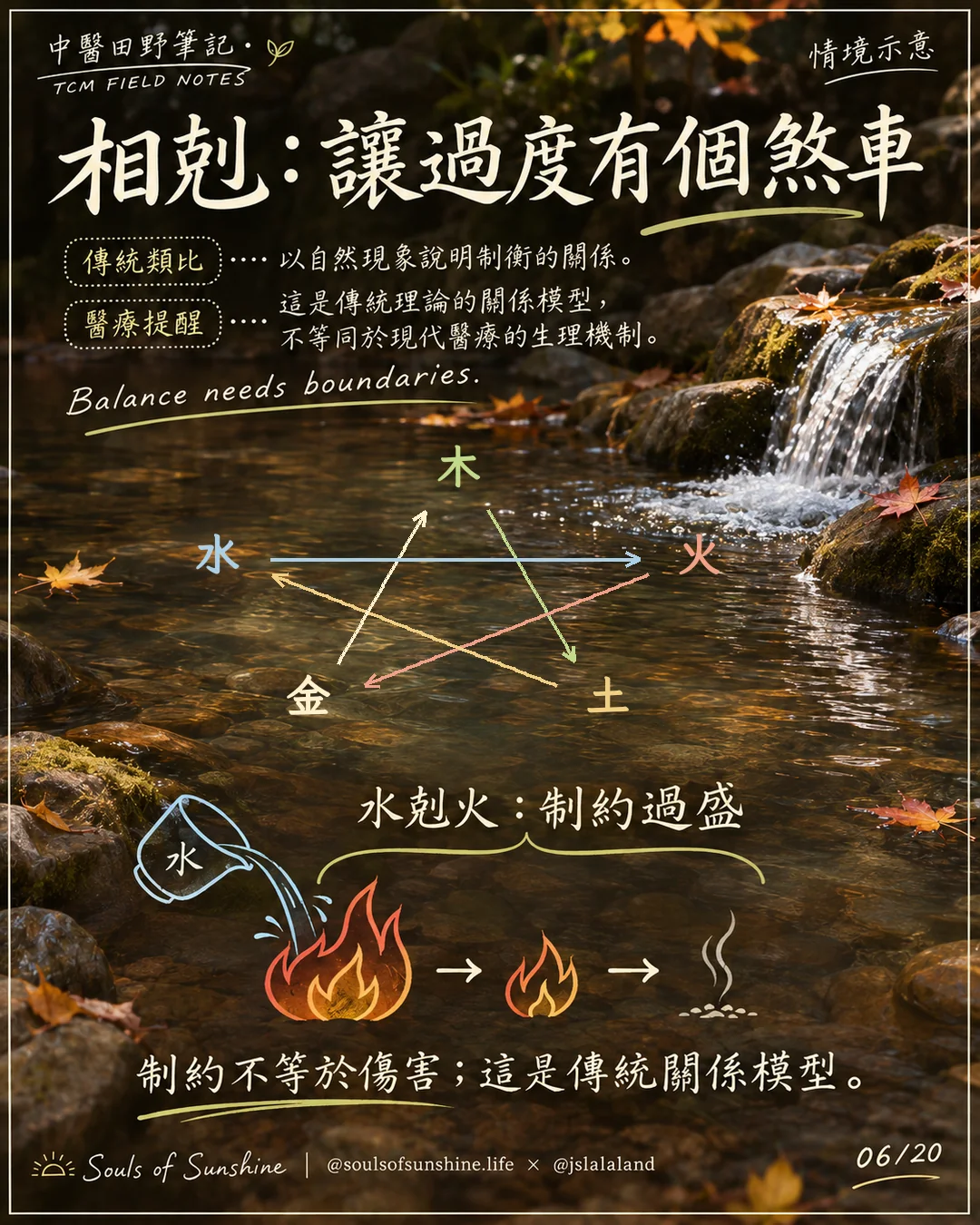
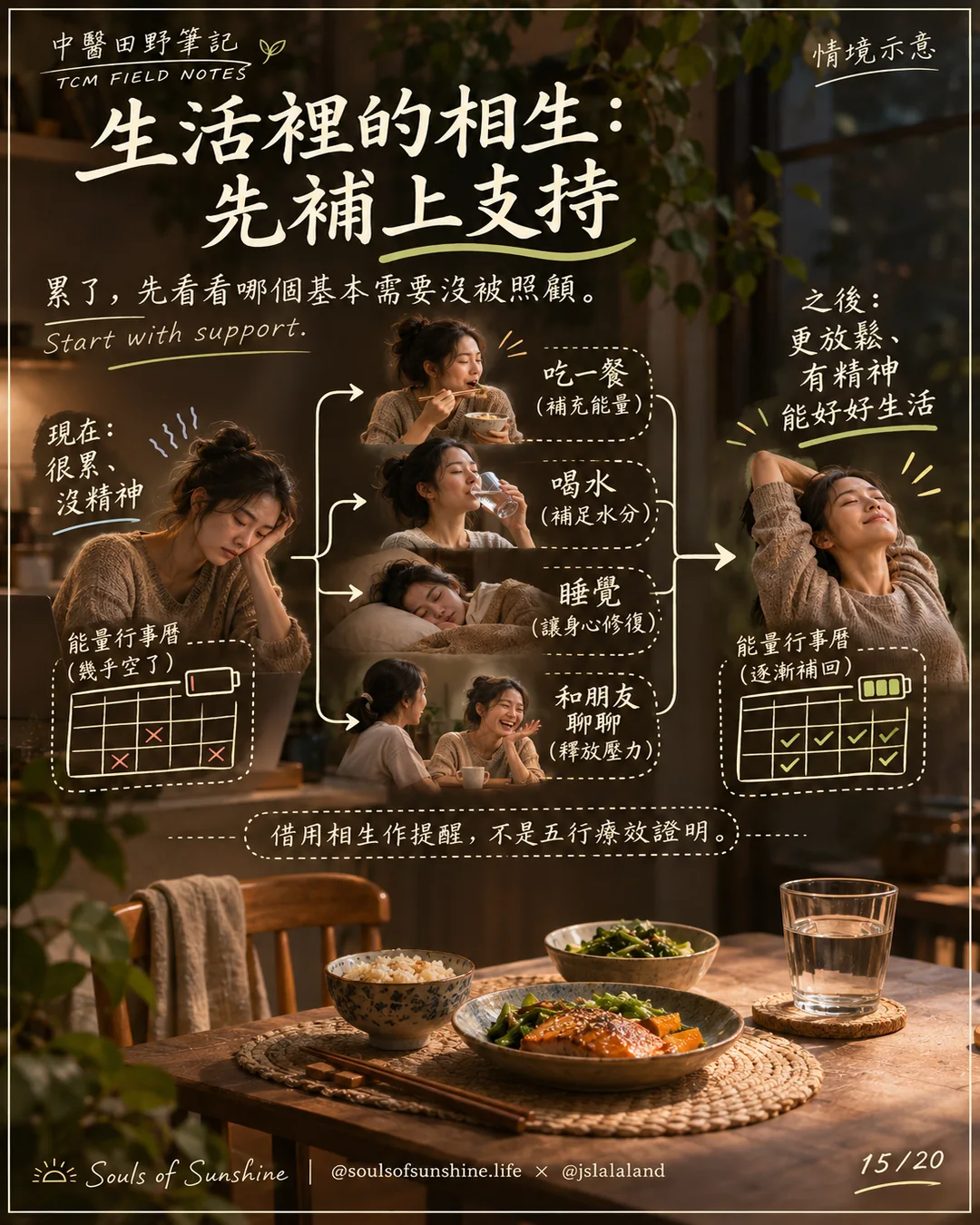
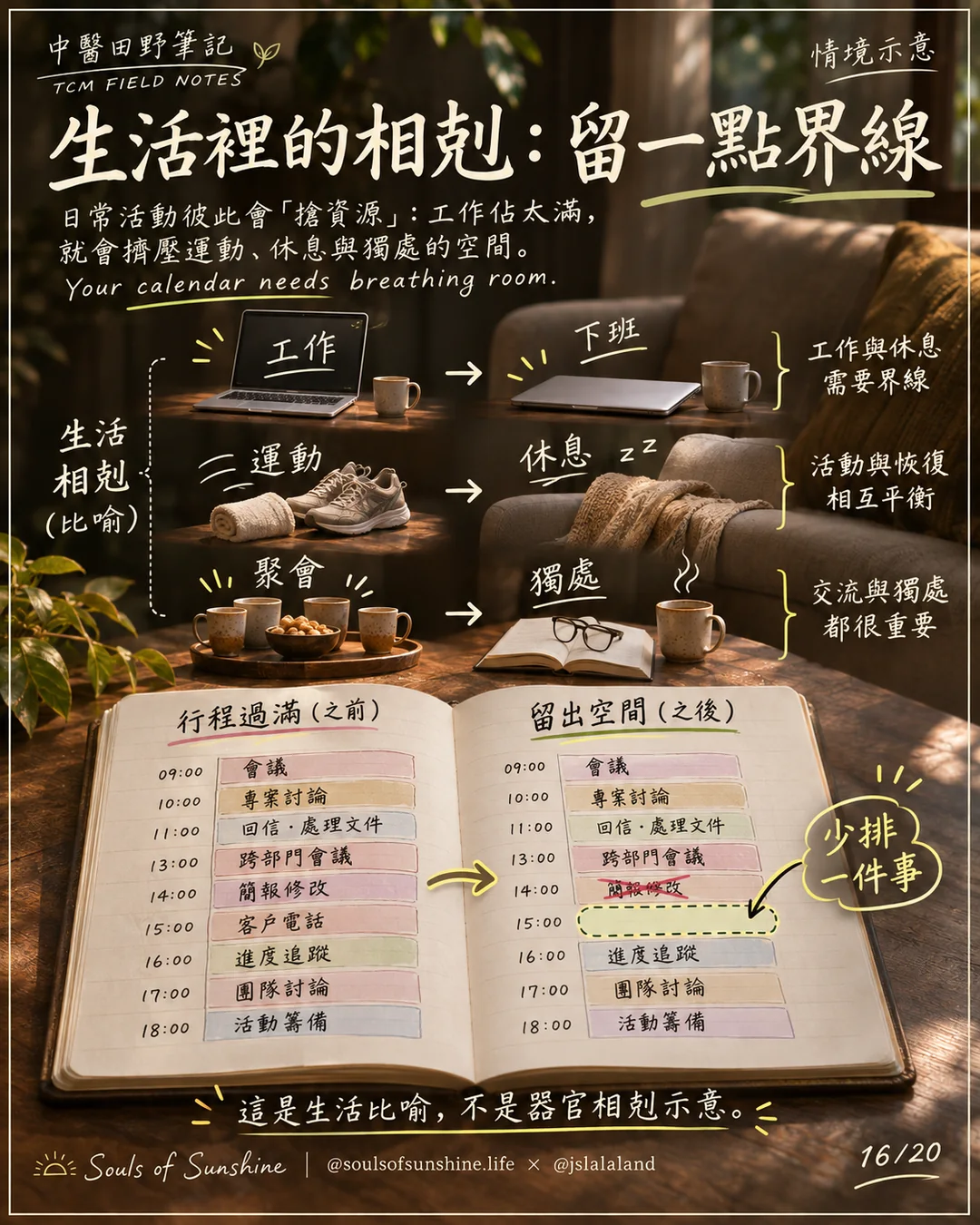
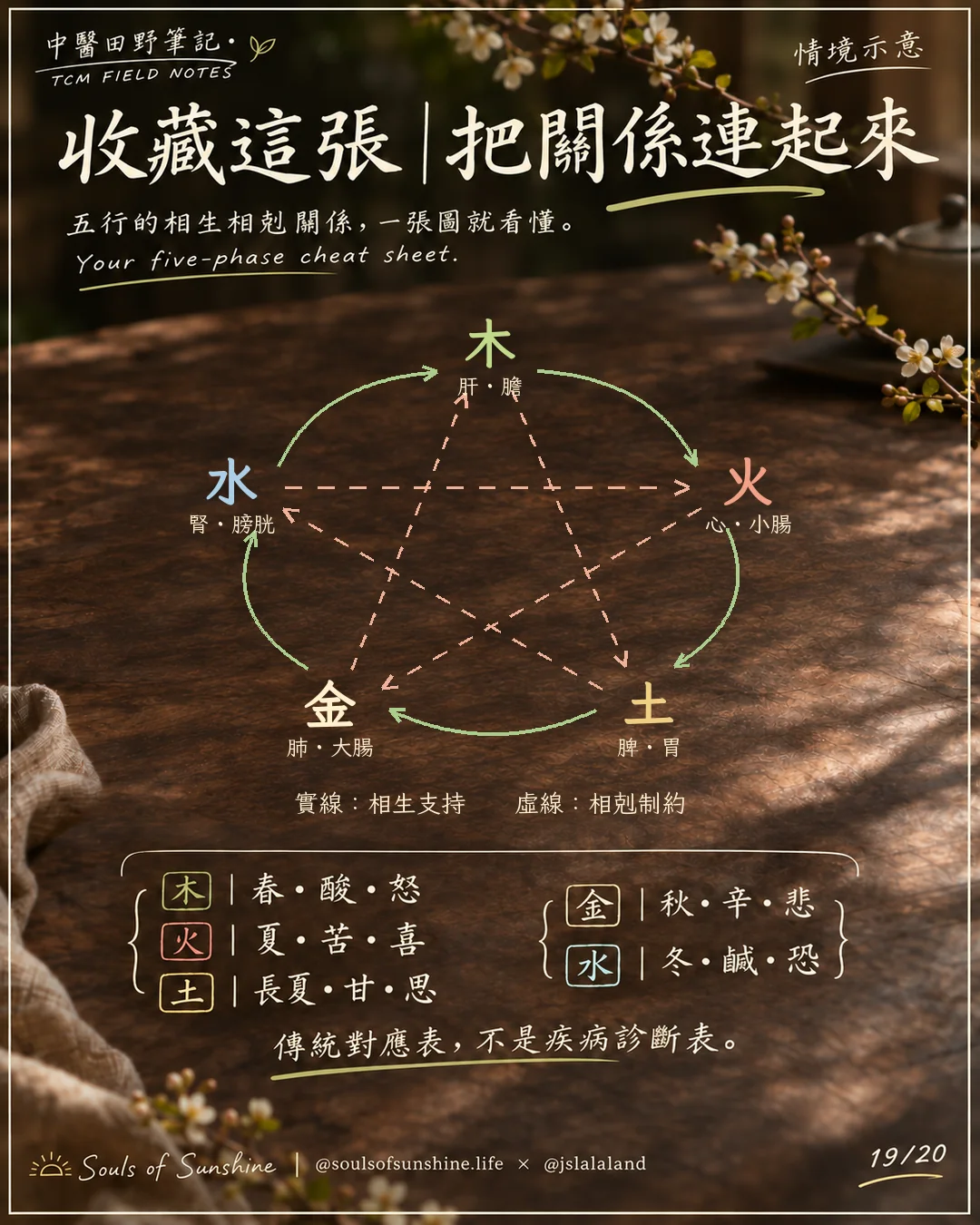
相生是一方支持下一方,像水澆在苗上;相剋是讓過度有個煞車,像水把太旺的火壓下來。制約不等於傷害。
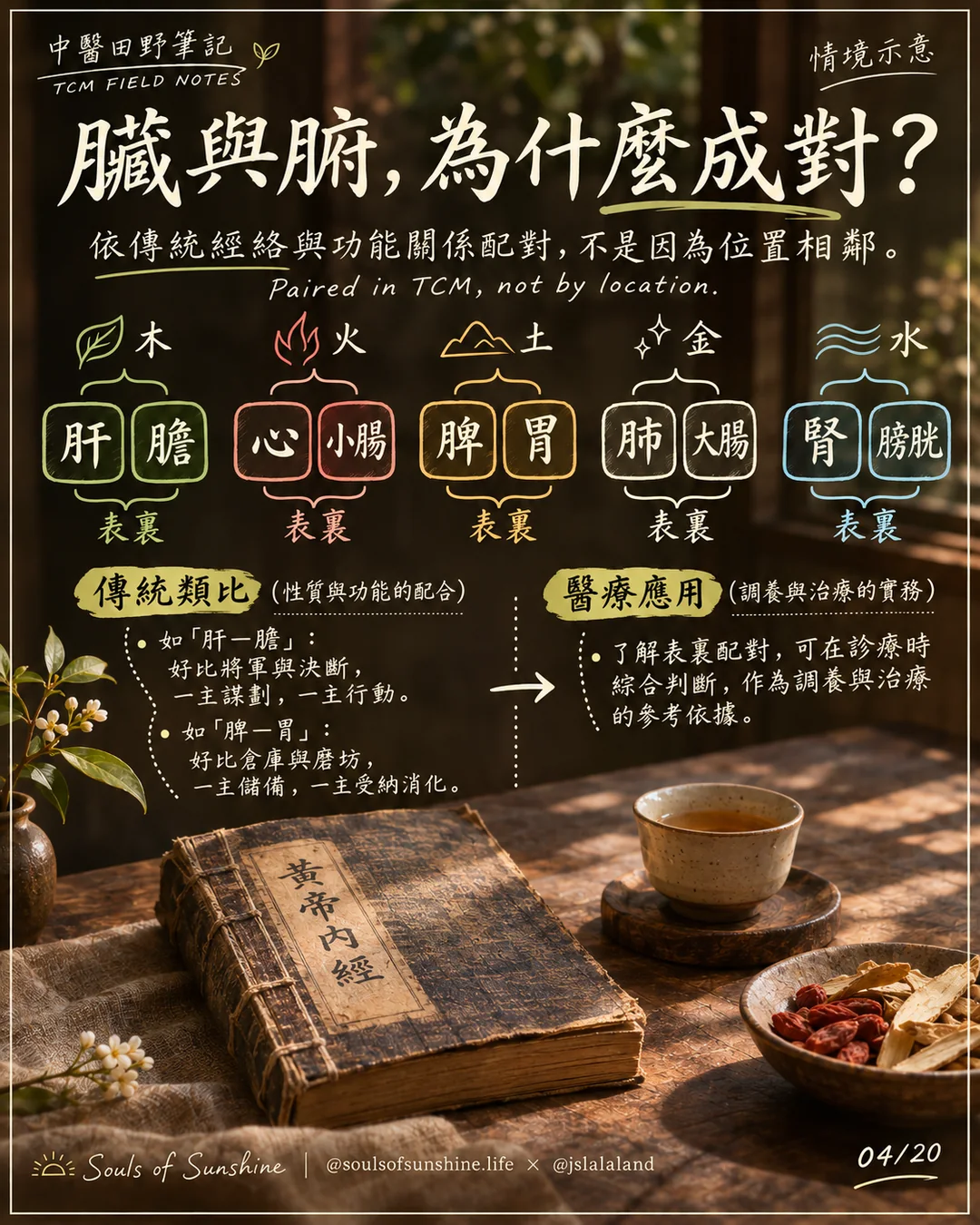
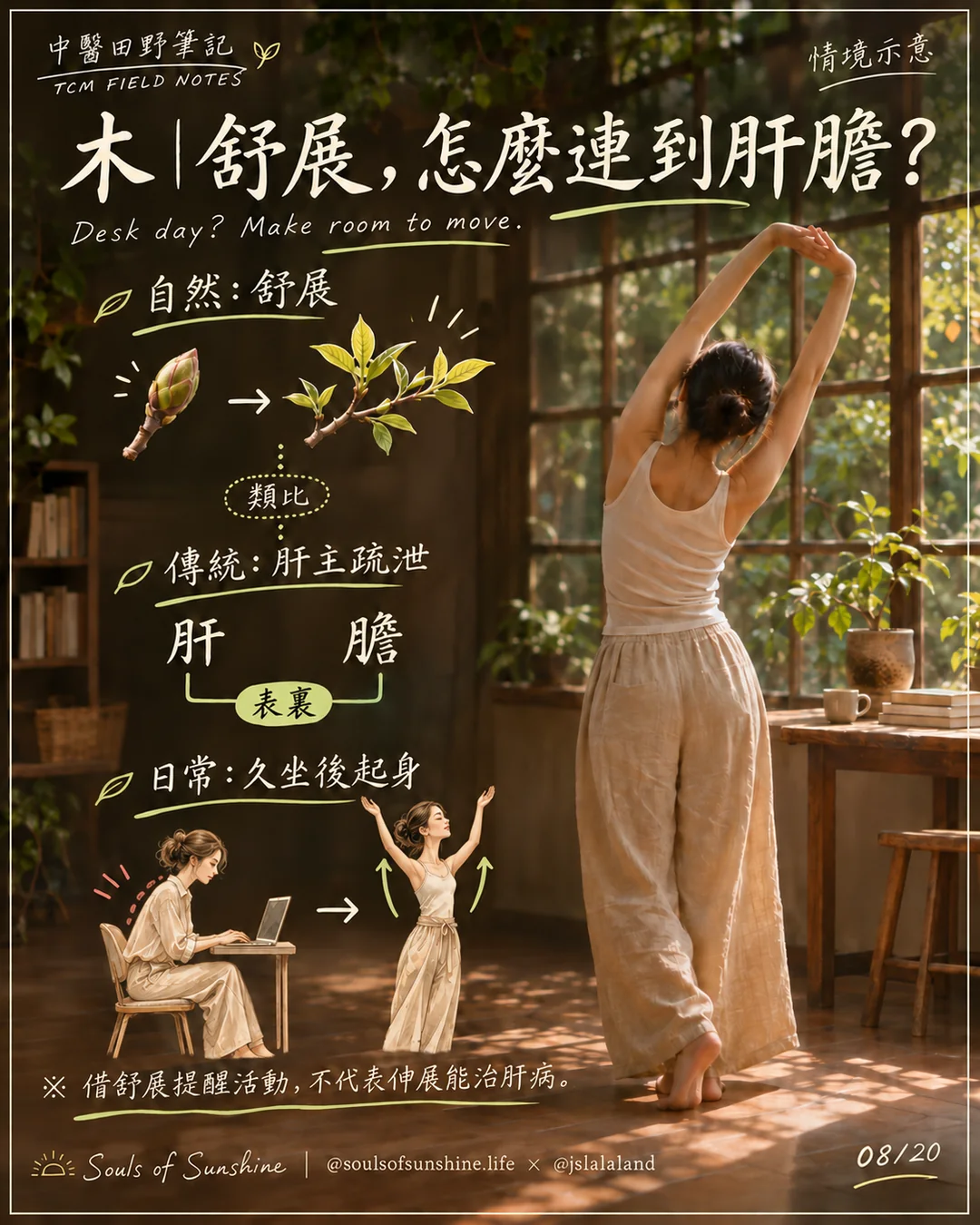
肝膽、心小腸、脾胃、肺大腸、腎膀胱,是依傳統經絡學和功能配成表裡,不是因為它們長在隔壁;中醫養的脾,也不等於解剖學的脾臟。
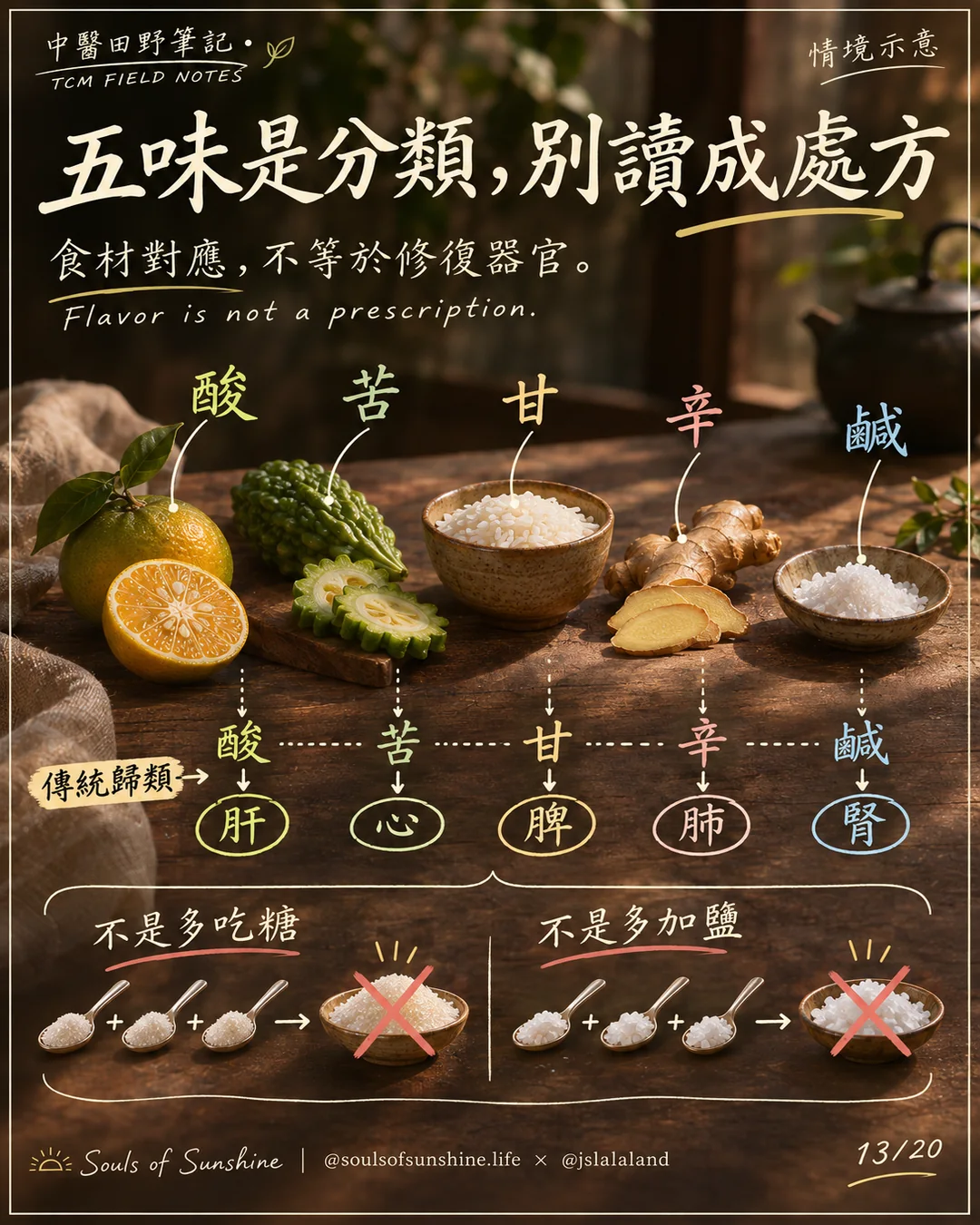
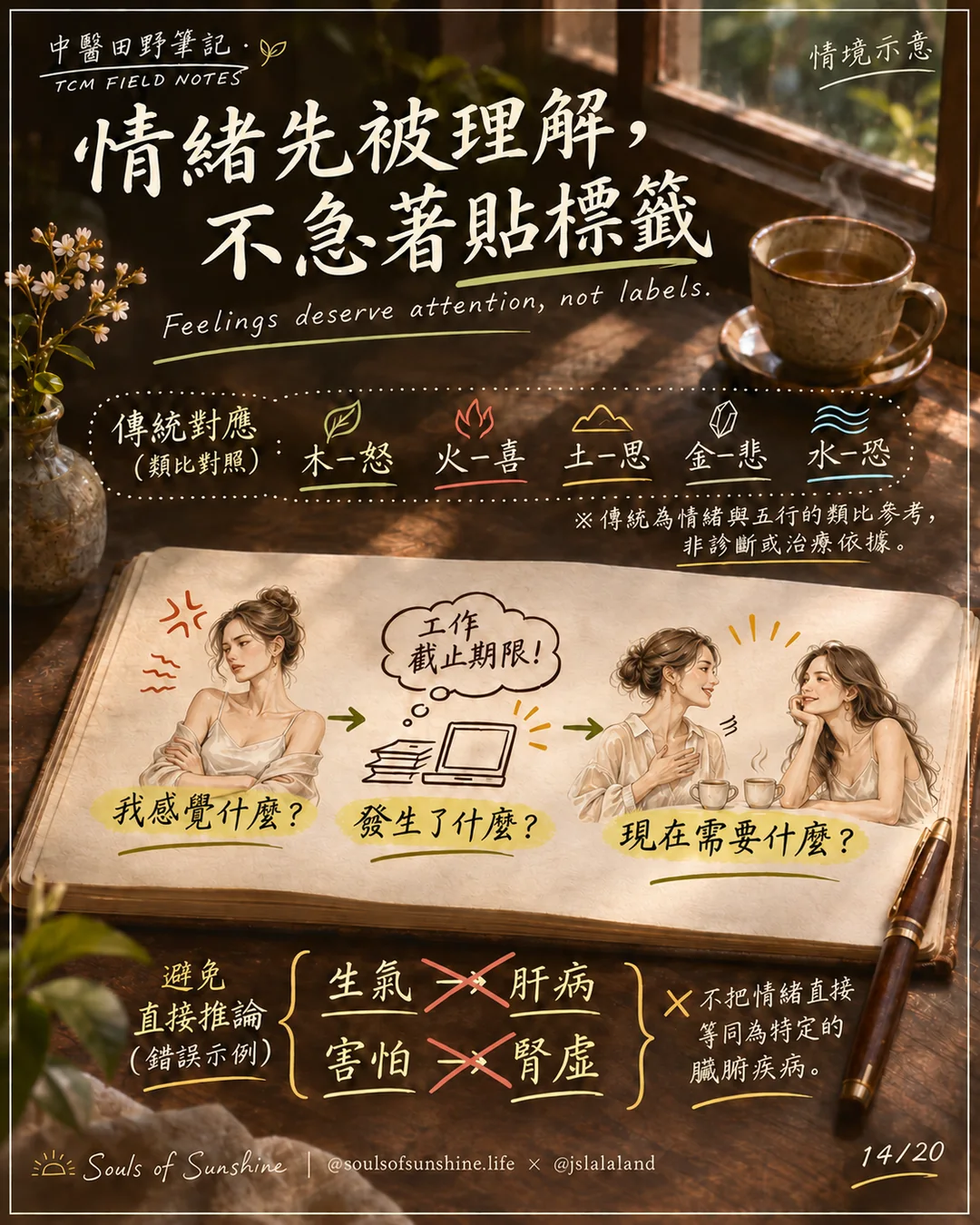
五味、情緒的對應很好記,但別讀成處方:甘歸脾不是要多吃糖,鹹歸腎不是要多加鹽,生氣也不等於肝出了問題。
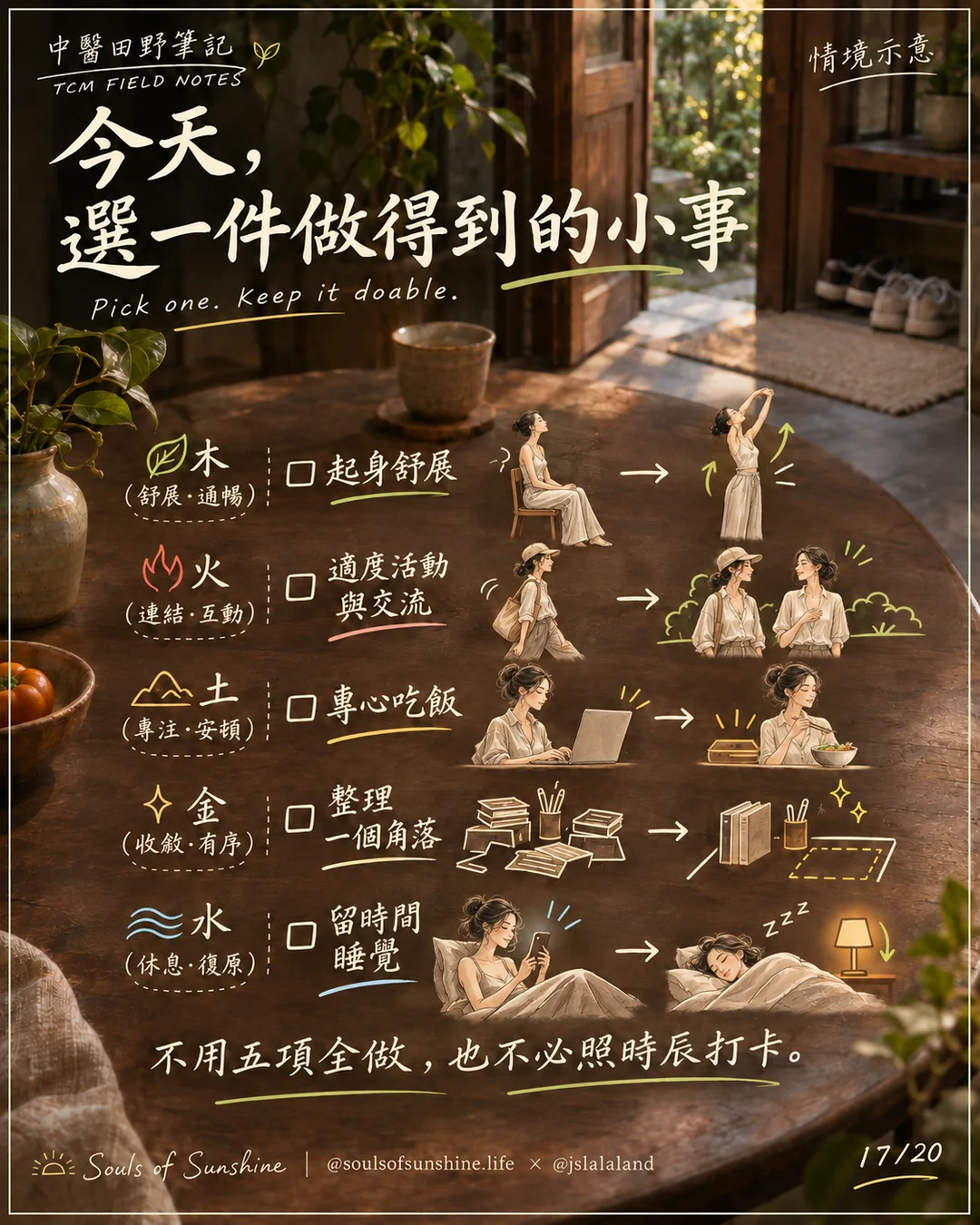
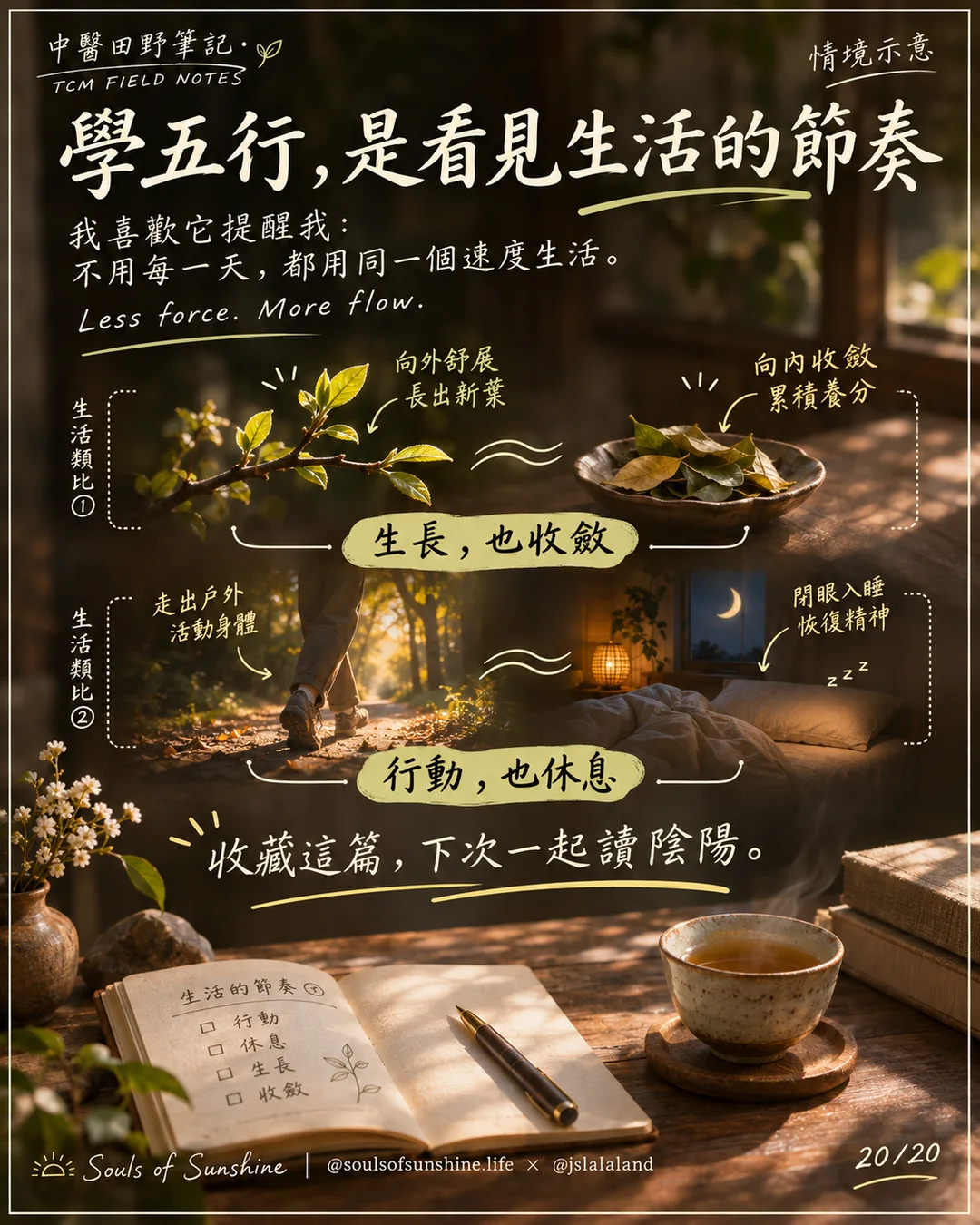
我喜歡它提醒我:不用每一天,都用同一個速度生活。今天選一件做得到的小事就好,起身伸展、專心吃一頓飯,或早一點睡。
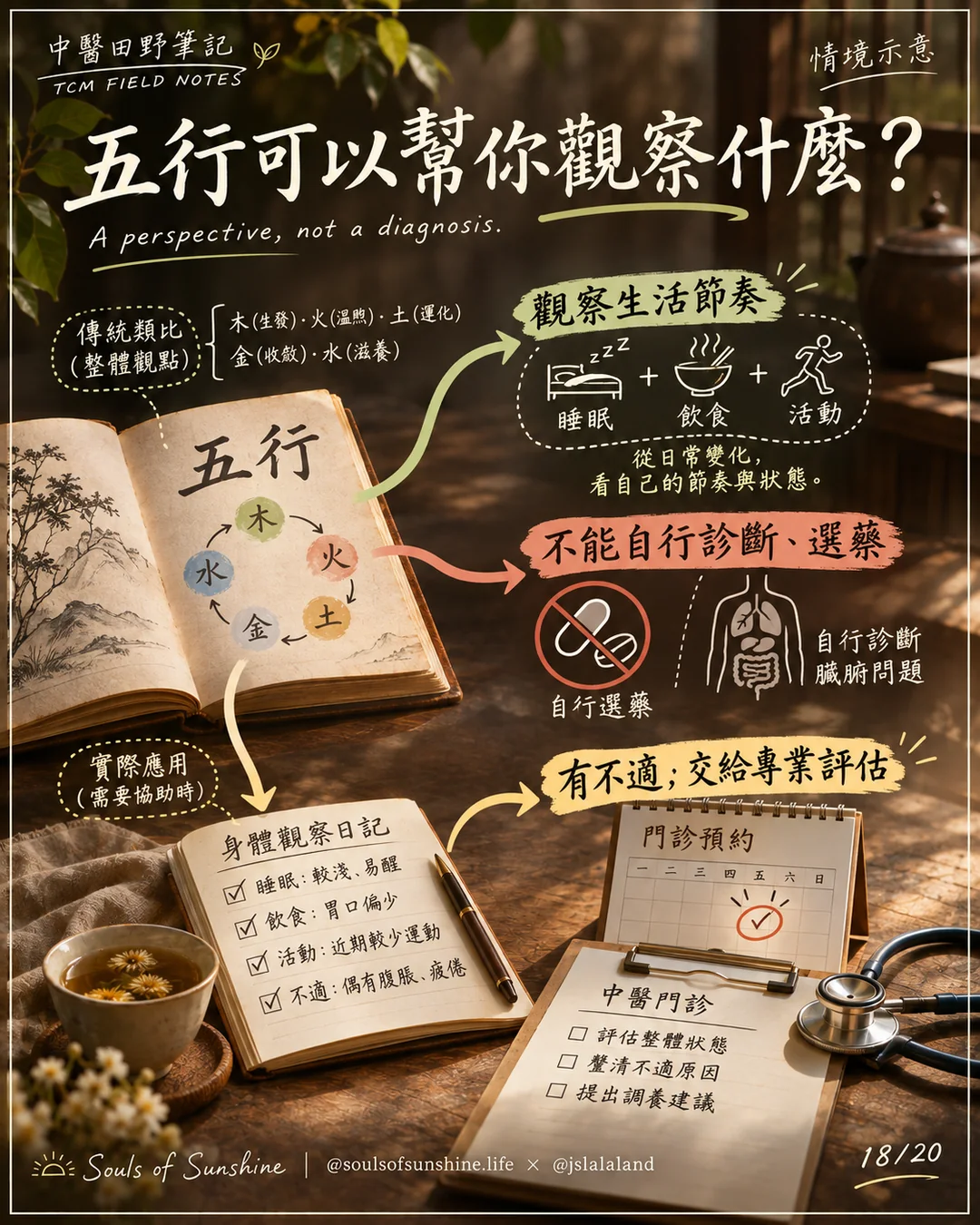
這是傳統的自然類比和整體思考框架,不是醫療建議,也不能拿來自己診斷或選藥;身體不舒服,交給有執照的醫師或中醫師評估。下次,一起讀陰陽。
The five phases often get called 'five elements聚', but I prefer to see them as a map of relationships: Wood, Fire, Earth, Metal and Water are five kinds of change, stretching, warming, nourishing, gathering and storing.
In the generating cycle each phase supports the next, like water on a seedling; in the controlling cycle one puts a brake on excess, like water calming a fire that's too strong. Restraint isn't harm.
Liver and Gallbladder, Heart and Small Intestine, Spleen and Stomach, Lungs and Large Intestine, Kidneys and Bladder are paired by traditional meridians學 and function, not because they sit side by side; and the TCM養 Spleen isn't the anatomical spleen.
The flavour and emotion links are easy to remember, but don't read them as prescriptions: 'sweet goes to the Spleen' doesn't mean more sugar, 'salty goes to the Kidneys' doesn't mean more salt, and anger doesn't mean something is wrong with your liver.
What I like is the reminder that you don't have to live every day at the same speed. Pick one doable thing today: stand up and stretch, give one meal your full attention, or go to bed a bit earlier.
This is a traditional analogy and a way of thinking, not medical advice, and not a tool for diagnosing yourself or choosing medicine; if something feels off, see a licensed doctor or TCM practitioner. Next time: yin and yang.
這本圖鑑提到的,SOS 練得到PRACTISE IT AT SOS
來源SOURCES
- Britannica|Wuxing (Chinese philosophy)
- Internet Encyclopedia of Philosophy|Wuxing (Wu-hsing)
- NCCIH(美國國家衛生研究院)|Traditional Chinese Medicine: What You Need To Know
這是生活文化觀察,不是醫療建議。回到我的圖鑑,或到 Instagram @soulsofsunshine.life × @jslalaland 看原貼文。